Wellness that grows communities.
5
Direct jobs in production, quality, sales & marketing
13
Indirect livelihoods across our supply network
3
Youth-led briquette producers powering our drying cycle
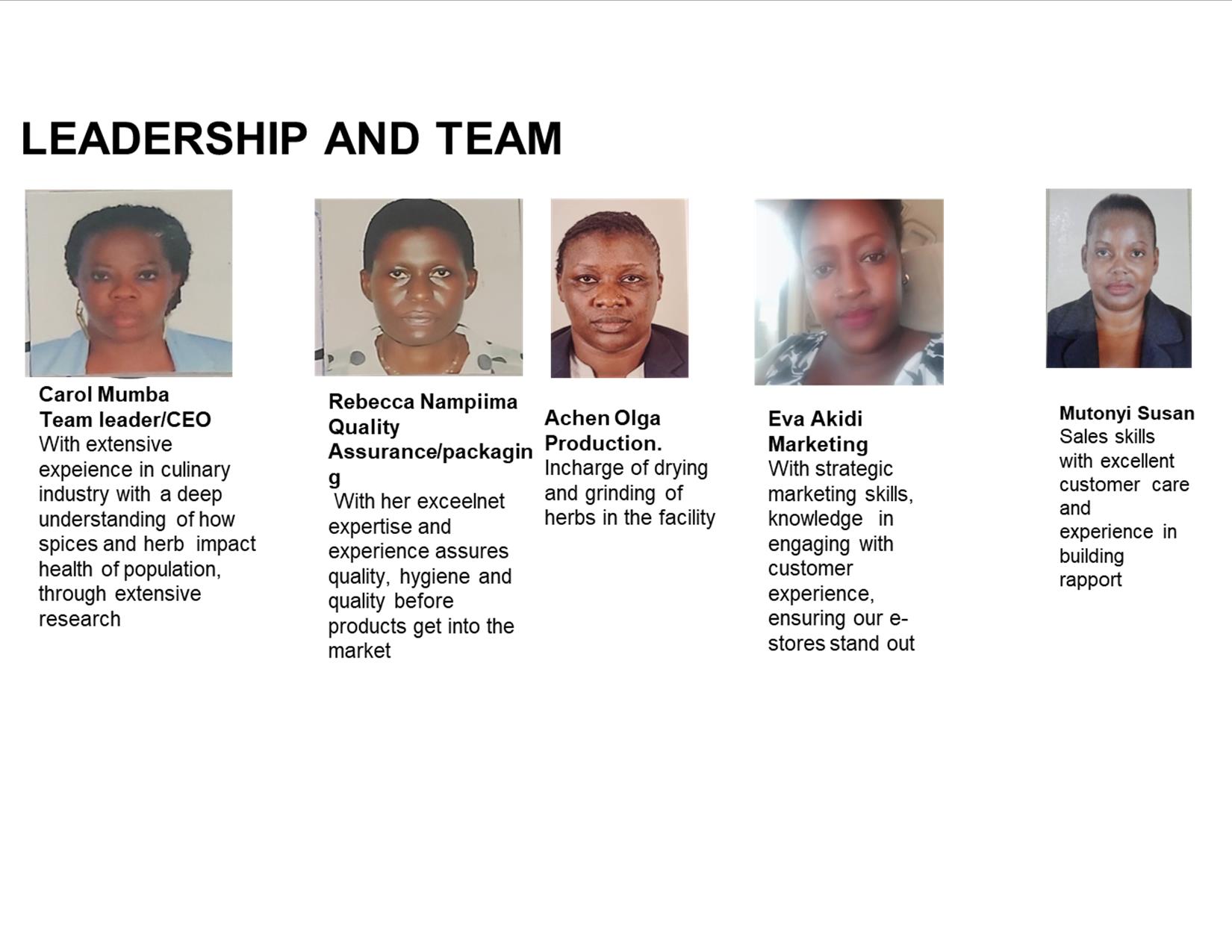
Leadership & Team
A small team, a wide ripple.
Akari has created direct employment for a small but growing team of 5, working across production, quality management, sales and marketing.
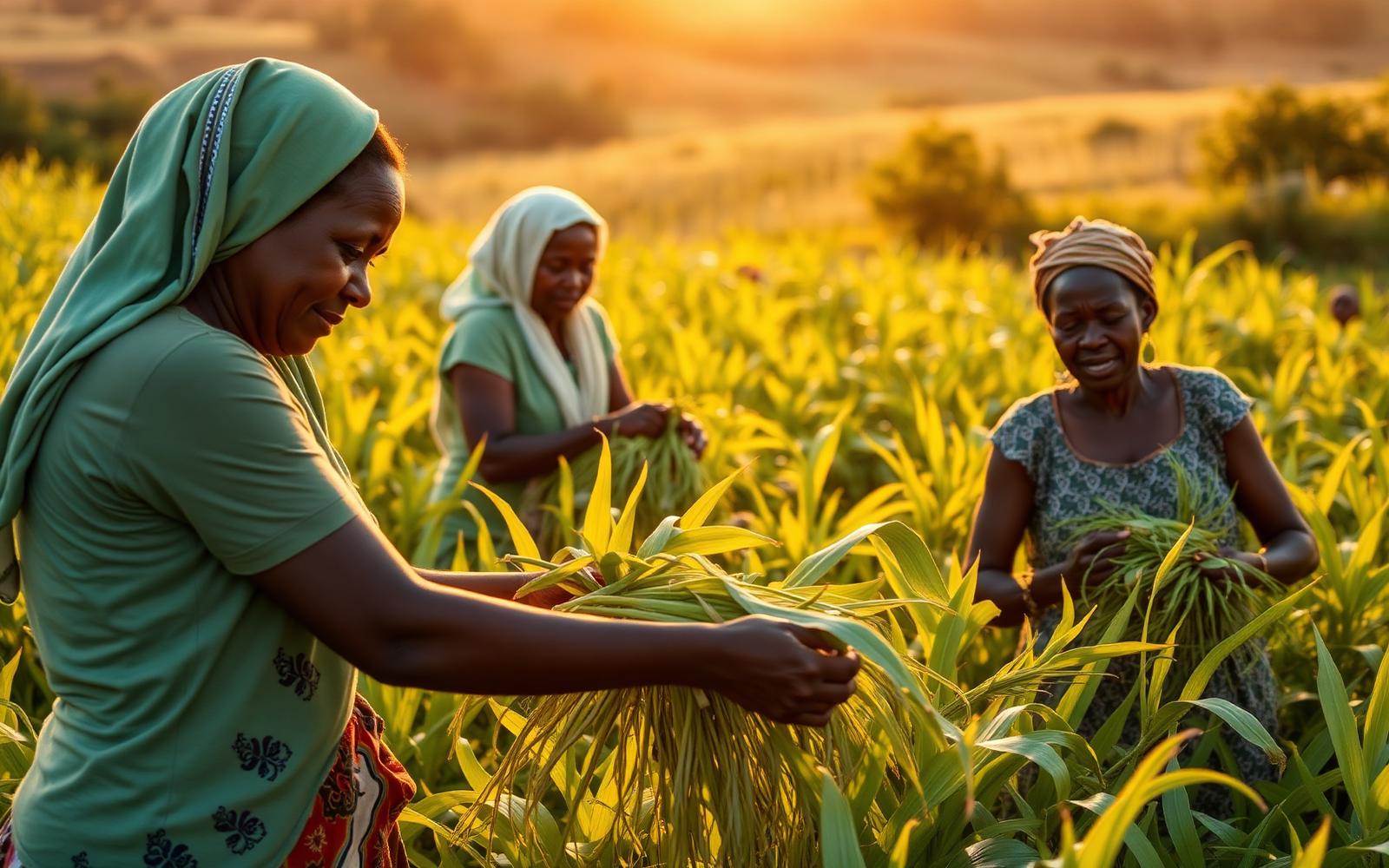
Beyond our payroll, we support 13 indirect livelihoods by sourcing herbs, spices and medicinal plants — turmeric, ginger, moringa, guava leaves — from women smallholder farmers in Mukono and Mpigi.
We promote clean energy adoption by sourcing briquettes from 3 youth-led producers to fuel our production cycle, particularly the drying process.
Affordable wellness, informed choices.
Socially, we have improved access to natural wellness spices and herbs at affordable cost within Wakiso and other parts of Uganda — educating households on lifestyle diseases and supporting better choices around diet and nutrition to curb malnutrition.
At our outlet, people come for free educational guidance on natural health and nutrition. We actively promote black pepper as a substitute for adding salt to cooked food.
By promoting preventative care, we help reduce the burden on households and the public healthcare system — fewer cases that would otherwise increase demand on clinics and hospitals.
By focusing on value-added products — herbal tea blends, omega-3 superseeds, turmeric blends — we generate higher margins than raw spice sales, pay suppliers fairly, and keep income circulating within the local economy.
We tackle hidden hunger and malnutrition with our super plant seeds rich in Omega-3 — a nutrient-dense blend that delivers essential fatty acids, plant protein, iron, zinc and key micronutrients often missing from everyday diets.
For pregnant and nursing mothers, these Omega-3 superseeds support healthy fetal brain and eye development, replenish iron stores, and help mothers stay strong and nourished through pregnancy and breastfeeding.
Support for local farmers
We pay above-market rates and offer multi-season contracts so farmers can plan and invest in better land care.
Women empowerment
Most of our supply chain — from harvest to packaging — is led and operated by women across Uganda.
Sustainable sourcing
We work with regenerative-leaning farms and prioritize indigenous, drought-resilient crops.
Wellness education
Free community workshops on traditional herbs, daily nutrition, and lifestyle disease prevention.